

One year of building smarter WordPress automation, connecting more tools, and making AI-powered workflows a reality.
2026 was the year Zaplane began its journey toward becoming a more complete WordPress automation platform.
From our first release in June to a growing ecosystem of integrations, AI-powered tools, and advanced workflow capabilities, every update brought us closer to one goal: helping WordPress users automate more and work smarter.
We started with a visual workflow builder. Today, Zaplane brings together triggers, actions, AI agents, webhooks, communication tools, and integrations in one WordPress-native platform.
This year wasn’t just about adding features. It was about building a stronger foundation for the future of WordPress automation.
Let’s look back at what we built, what we learned, and where we’re heading next.
The Day Zaplane Changed WordPress Automation
Every product starts with an idea.
For Zaplane, that idea was simple: WordPress users should be able to connect their plugins, automate repetitive tasks, and build powerful workflows without depending on custom code for every task.
On June 14, 2026, Zaplane released its first version.
The initial release introduced a visual workflow builder with triggers, actions, and multi-step automation. It gave users a starting point for connecting different parts of their WordPress websites.
But we didn’t want to stop at simple automation.
We wanted to build something that could grow with WordPress websites—from straightforward plugin connections to advanced workflows involving AI, external services, and complex data processing.
That vision shaped every major development decision throughout 2026.
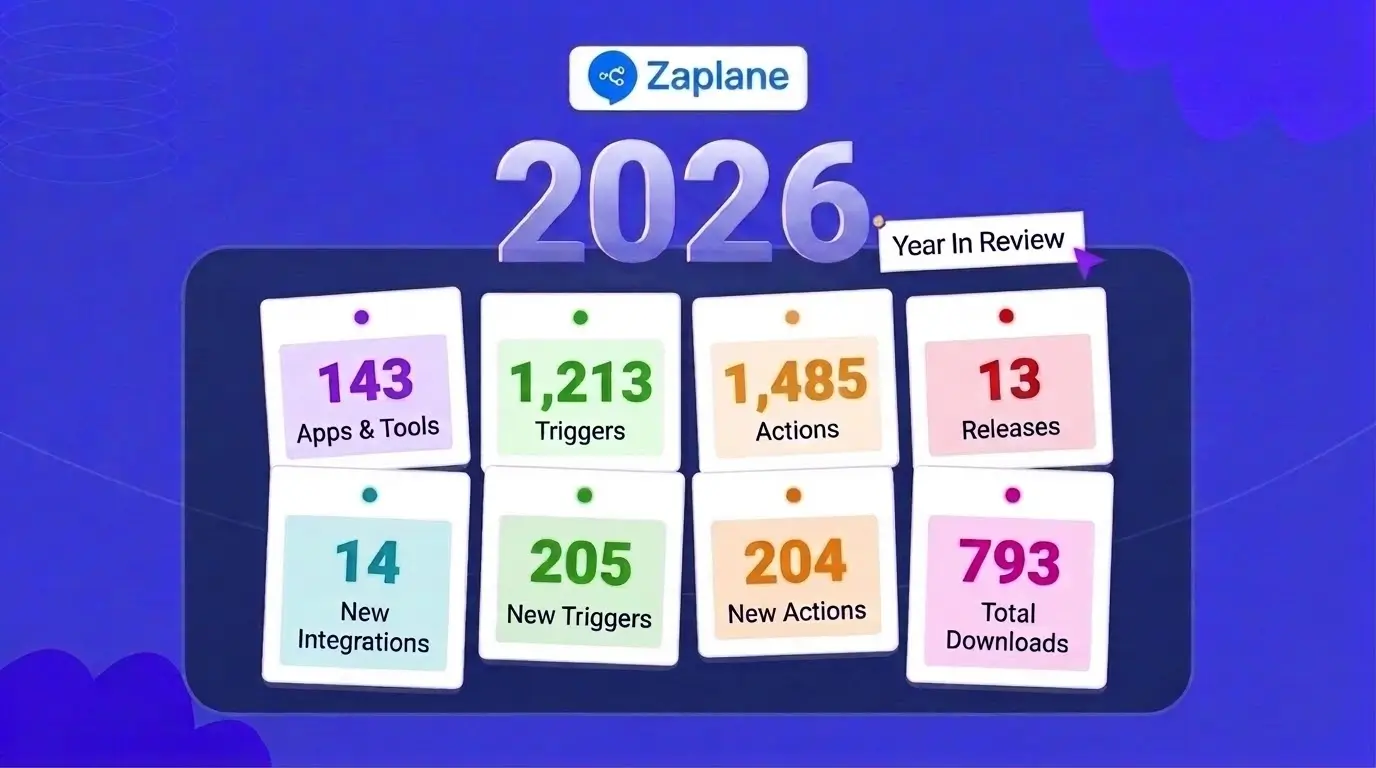
By November 18, Zaplane had reached version 1.7.0, with 13 releases delivered since its first launch.
It has been a year of continuous development, learning, and improvement.
2026 by the Numbers (Yes, We’re Proud of These)
A year of development is easier to understand when you look at what has been built.
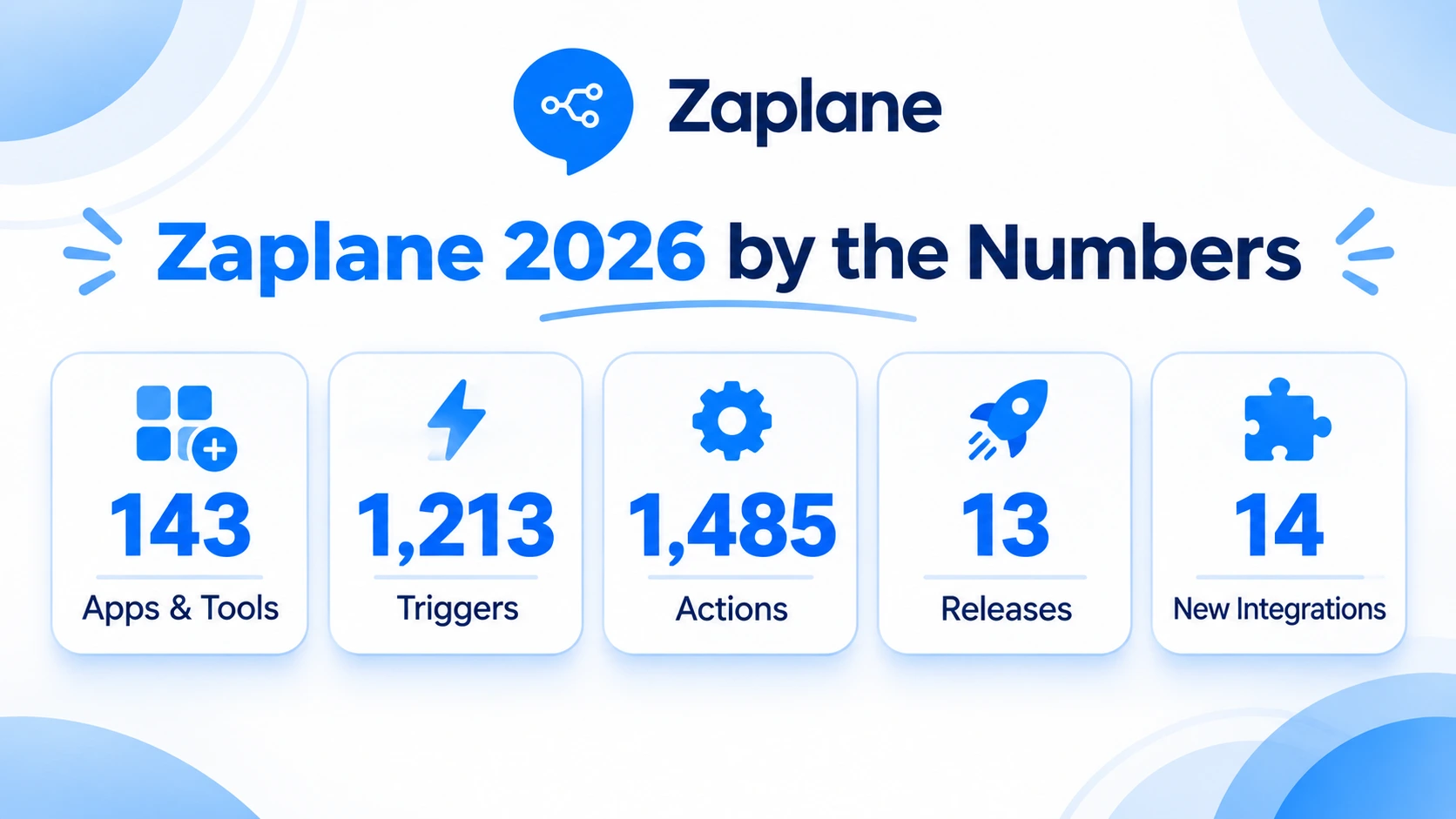
By November 18, 2026, Zaplane had reached several important milestones.
Our Yearly Highlights
The growth of the ecosystem is particularly important.
In version 1.2.0, Zaplane supported 93 apps and tools with 1,070 triggers and actions. By version 1.7.0, the ecosystem had expanded to 143 apps and tools, with 1,213 triggers and 1,485 actions.
That’s a significant expansion in the number of automation possibilities available to WordPress users.
Every number represents another way to connect applications, reduce manual work, and build more useful workflows.
What We’ve Built So Far: Zaplane Feature Highlights
Numbers show growth, but features show what users can actually do with the platform.
Throughout 2026, we focused on making Zaplane more capable, flexible, and useful for different WordPress automation scenarios.
Here are some of the major highlights.
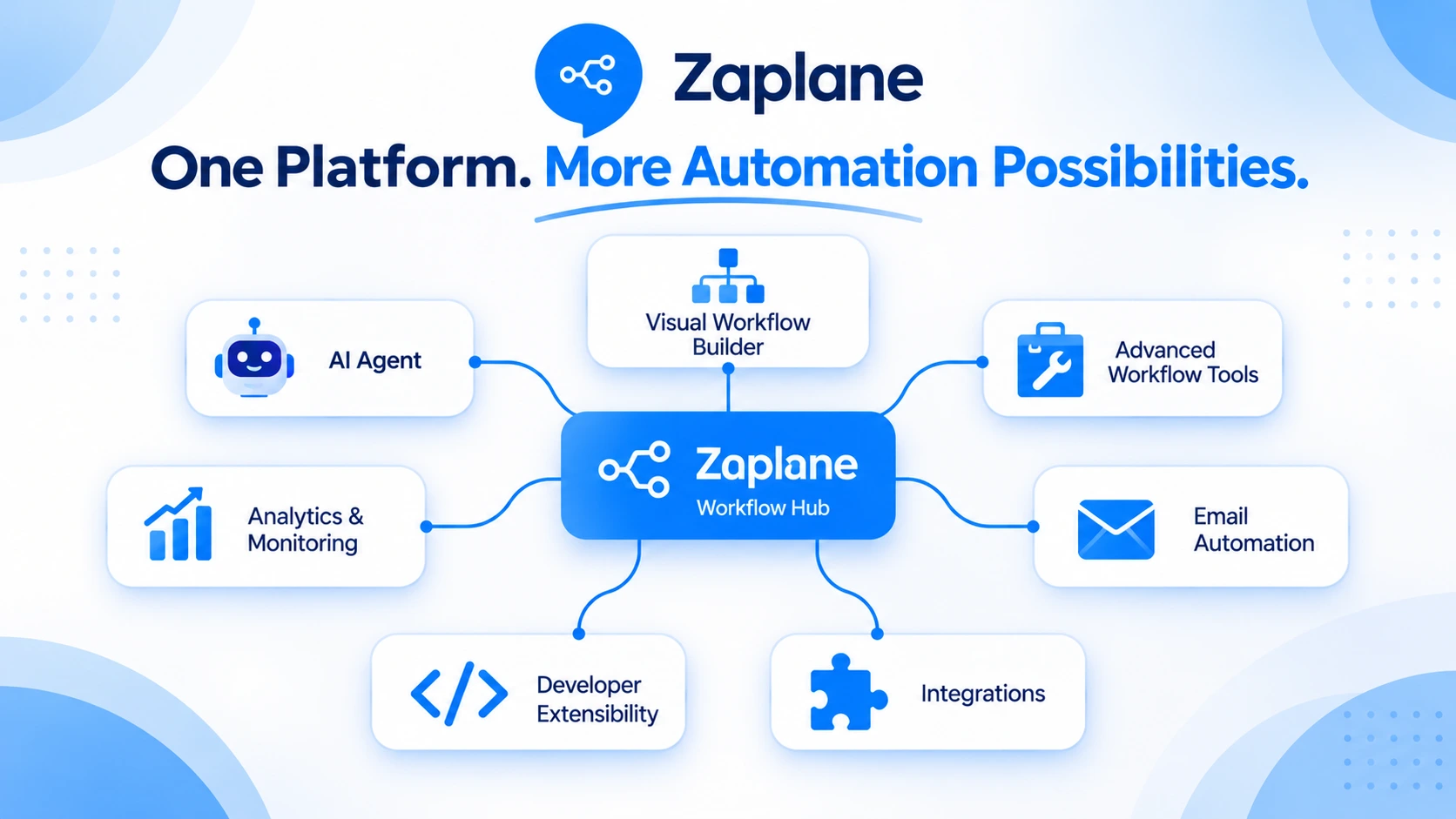
Visual Workflow Builder
The visual workflow builder is at the heart of Zaplane.
It allows users to connect triggers, actions, and workflow logic through a visual interface.
Instead of manually writing code to connect different plugins, users can create multi-step workflows and control how data moves between connected services.
We also redesigned the dashboard and workflow canvas, improved connection handling, and introduced better controls for working with dynamic data.
Our focus has been to make workflow creation more intuitive while supporting increasingly complex automation.
AI Agent & AI Automation
2026 was also an important year for bringing AI into WordPress automation.
Zaplane introduced AI Chat Models, AI Agents with tool calling, Conversation Memory, and Business Knowledge.
Users can connect AI models from Anthropic and OpenAI, as well as WordPress Core AI, to build AI-powered automation experiences.
Later, we expanded the AI Agent architecture with dedicated Chat Model, Memory, and Tool slots.
This creates a more organized way to configure AI Agents and connect them with workflow capabilities.
We also moved AI access toward the WordPress Abilities API, aligning Zaplane more closely with the evolving WordPress ecosystem.
The goal is to make AI a practical part of automation—not just a standalone chatbot.
Advanced Workflow Tools
Real-world automation often requires more than a simple trigger and action.
That’s why we expanded Zaplane’s workflow tools.
Throughout the year, we introduced and improved capabilities such as:
Version 1.7.0 introduced Aggregator and Batch Collector, together with trigger batch mode.
We also added per-item idempotency keys, duplicate cleanup, held-event counts, and batch logs to improve batch processing and visibility.
These capabilities help users handle more advanced data-processing and automation scenarios.
Workflow Analytics & Monitoring
Automation needs visibility.
Users need to understand what happened during a workflow execution, where an operation stopped, and whether an event was processed successfully.
Zaplane continued improving its workflow execution and monitoring experience through run history, batch logs, execution improvements, and better workflow testing.
We also worked on reliability improvements so that failed actions do not unintentionally allow downstream steps to continue.
Our ongoing focus is to make workflow execution easier to understand, troubleshoot, and maintain.
Email & Communication Automation
Automation is not only about connecting plugins. It’s also about helping businesses communicate.
Version 1.5.0 introduced Inbox and live chat capabilities for website chat, Facebook Messenger, and WhatsApp-related communication workflows.
The experience included saved replies, product cards, Business Knowledge-based automatic answers, agent presence, business hours, email capture, and real-time message delivery features.
We also improved email automation in version 1.5.1.
Users can send emails through WordPress’s wp_mail() with dynamic content, recipient details, CC, BCC, Reply-To, and rich HTML support.
Saved email templates and a block-based template builder made reusable email content easier to manage.
Customization & Developer Extensibility
We believe automation platforms should be extendable.
In version 1.5.0, we introduced a third-party integration API through zaplane_register_integration() and the zaplane_register_integrations hook.
We also introduced a WP-CLI command:
wp zaplane make:addon <slug>
These additions provide developers with more ways to extend Zaplane and build custom integrations.
The aim is to make Zaplane useful for both everyday WordPress users and developers who want to create more advanced automation experiences.
One WordPress Automation Ecosystem
The biggest idea behind Zaplane is bringing different automation capabilities together.
Triggers, actions, AI agents, webhooks, integrations, email automation, and workflow tools are not isolated features.
They work together as parts of one automation ecosystem.
Instead of relying on separate tools for every task, WordPress users can build connected workflows within their own websites.
That’s the direction we continued building toward in 2026.
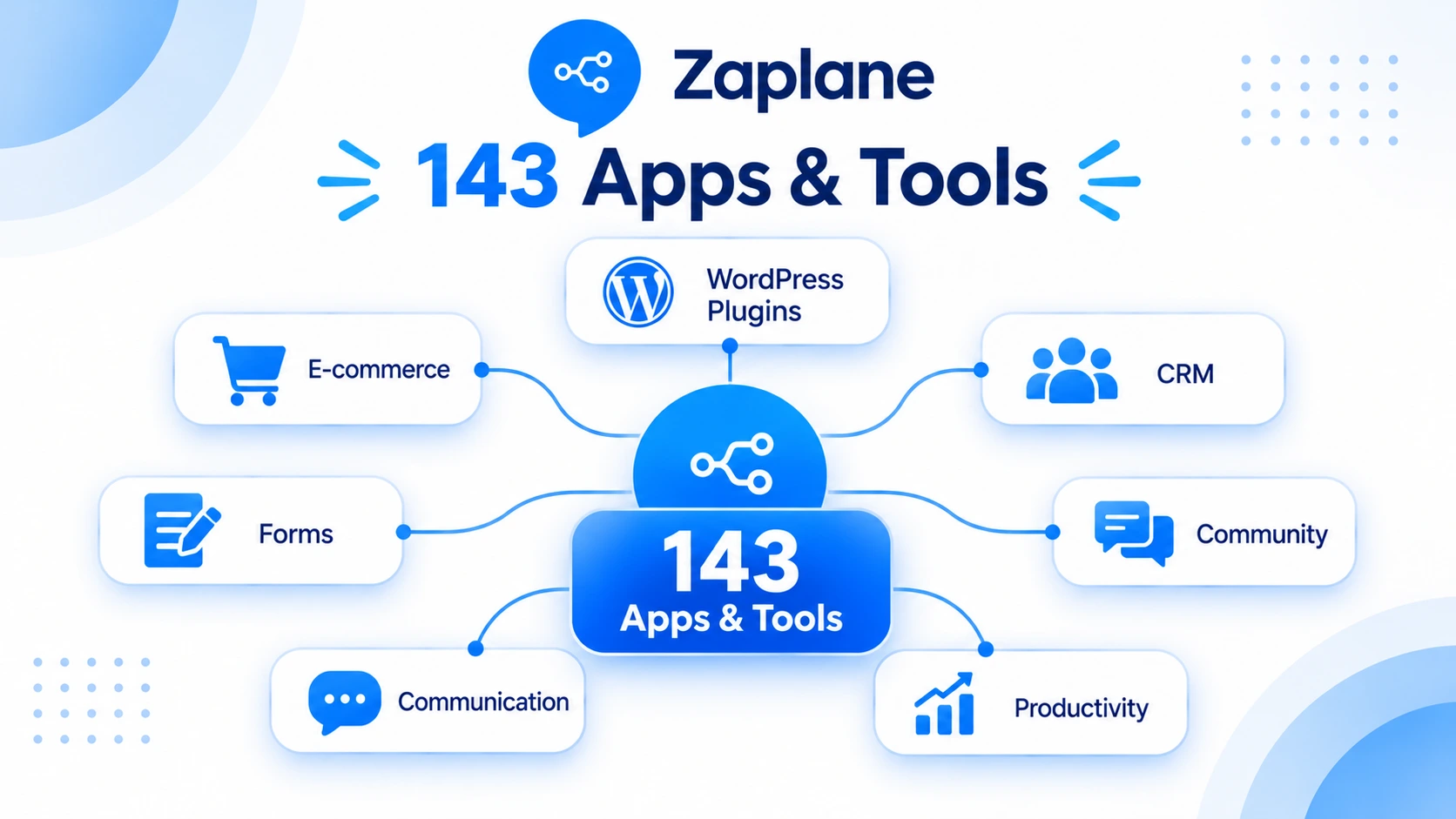
143 Apps & Tools: The Power of the Zaplane Ecosystem
A workflow automation platform becomes more useful when it can connect more applications.
Expanding the integration ecosystem was one of our biggest priorities in 2026.
By version 1.7.0, Zaplane had reached 143 apps and tools, including 117 apps and 26 tools.
This expansion creates more opportunities for WordPress websites to connect their existing plugins and external services.
WordPress Integrations
WordPress has a diverse ecosystem of plugins, and each website uses a different combination of tools.
Throughout 2026, Zaplane expanded its support for WordPress products and services, including:
These integrations help users automate activities across learning management, e-commerce, CRM, booking, community, content management, and more.
Third-Party Integrations
We also expanded connections beyond the WordPress plugin ecosystem.
Some notable additions included:
These connections help users bring external services into their WordPress automation workflows.
Custom Integrations
Not every website uses the same plugins or services.
That’s why developer extensibility matters.
With Zaplane’s integration API and custom integration capabilities, developers have more flexibility to connect their own WordPress functionality and external services.
Triggers & Actions
Triggers and actions are the building blocks of every automation.
A trigger starts a workflow when an event occurs. An action performs a task in response.
By November 18, 2026, Zaplane offered:
This gives users a growing collection of automation possibilities across 143 apps and tools.
Trust Earned Through Continuous Development
A growing automation platform must be reliable, secure, and compatible with the WordPress environment.
Throughout 2026, we continued working on the foundations that make Zaplane dependable.
Security Improvements
Security was an important part of our development work.
We improved webhook signature verification, shared-secret handling, outbound HTTP protections, input sanitization, role validation, and workflow execution safeguards.
We also restricted sensitive administrative capabilities from externally started workflows and strengthened protections around AI and external access.
WordPress Compatibility
Zaplane continued improving compatibility with WordPress and PHP environments.
We worked on PHP 7.4 compatibility, WordPress integration behavior, background execution, and plugin-specific issues.
Zaplane’s current requirements include WordPress 6.8+ and PHP 7.4+.
Workflow Reliability
We also focused on improving the reliability of workflow execution.
This included better trigger testing, execution handling, duplicate-event protection, batch processing, and fixes for integration-specific issues.
Zaplane uses Action Scheduler for background workflow steps, while workflow data, credentials, and run history are stored in the WordPress database.
These improvements are part of our ongoing commitment to making automation more dependable for WordPress websites.
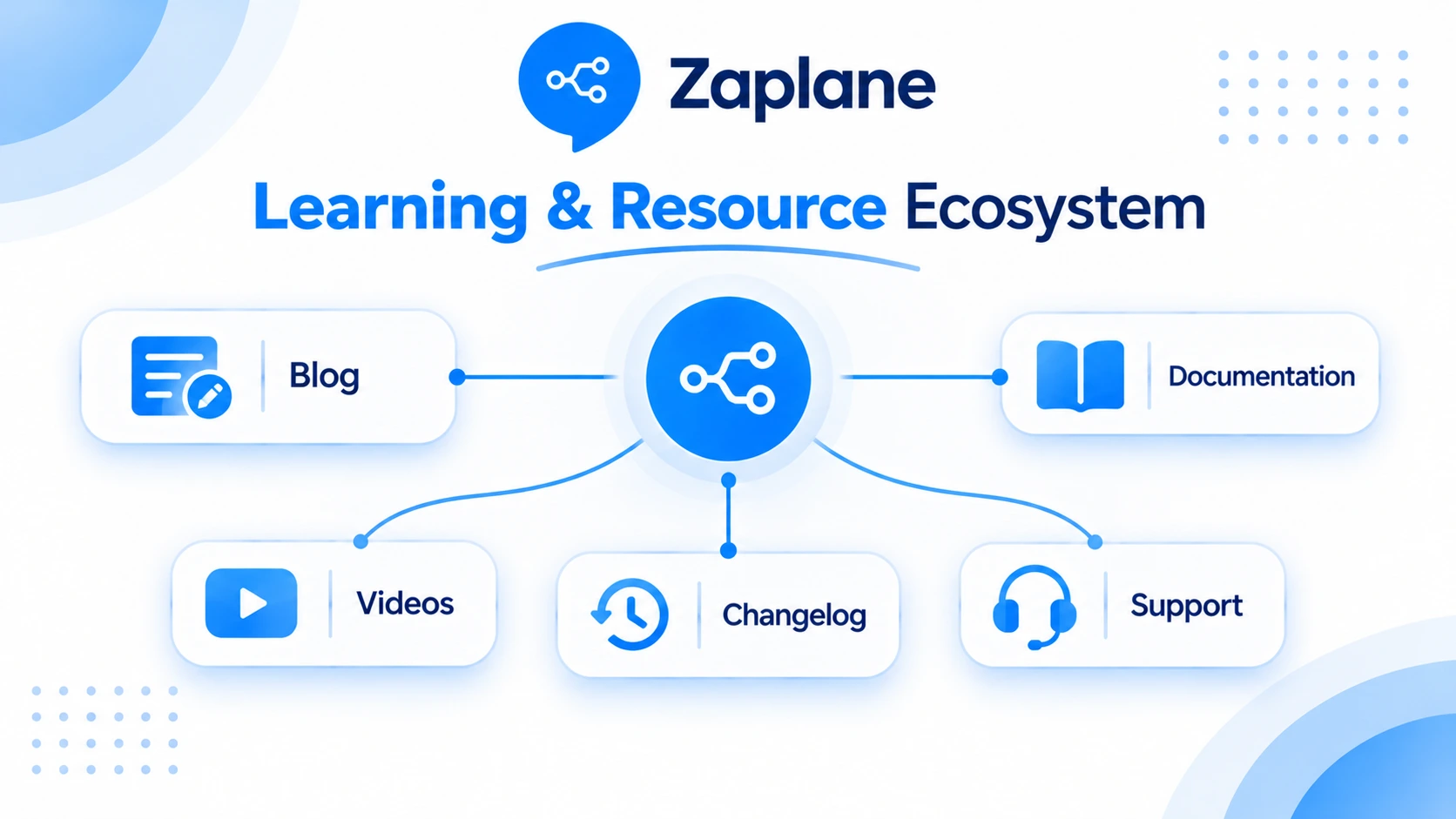
Zaplane Content at a Glance
A useful product needs more than features. Users also need resources that help them understand, configure, and troubleshoot those features.
Our documentation and product resources are important parts of the Zaplane experience.
Documentation
The documentation helps users understand Zaplane’s features, integrations, and configuration options.
Explore: https://zaplane.app/docs.
What’s New
The changelog provides an overview of product releases, new features, improvements, and fixes.
Explore: https://zaplane.app/changelog
Support
When users need help, clear support resources are an important part of the experience.
We want users to have a clear path to understanding the platform and resolving problems.
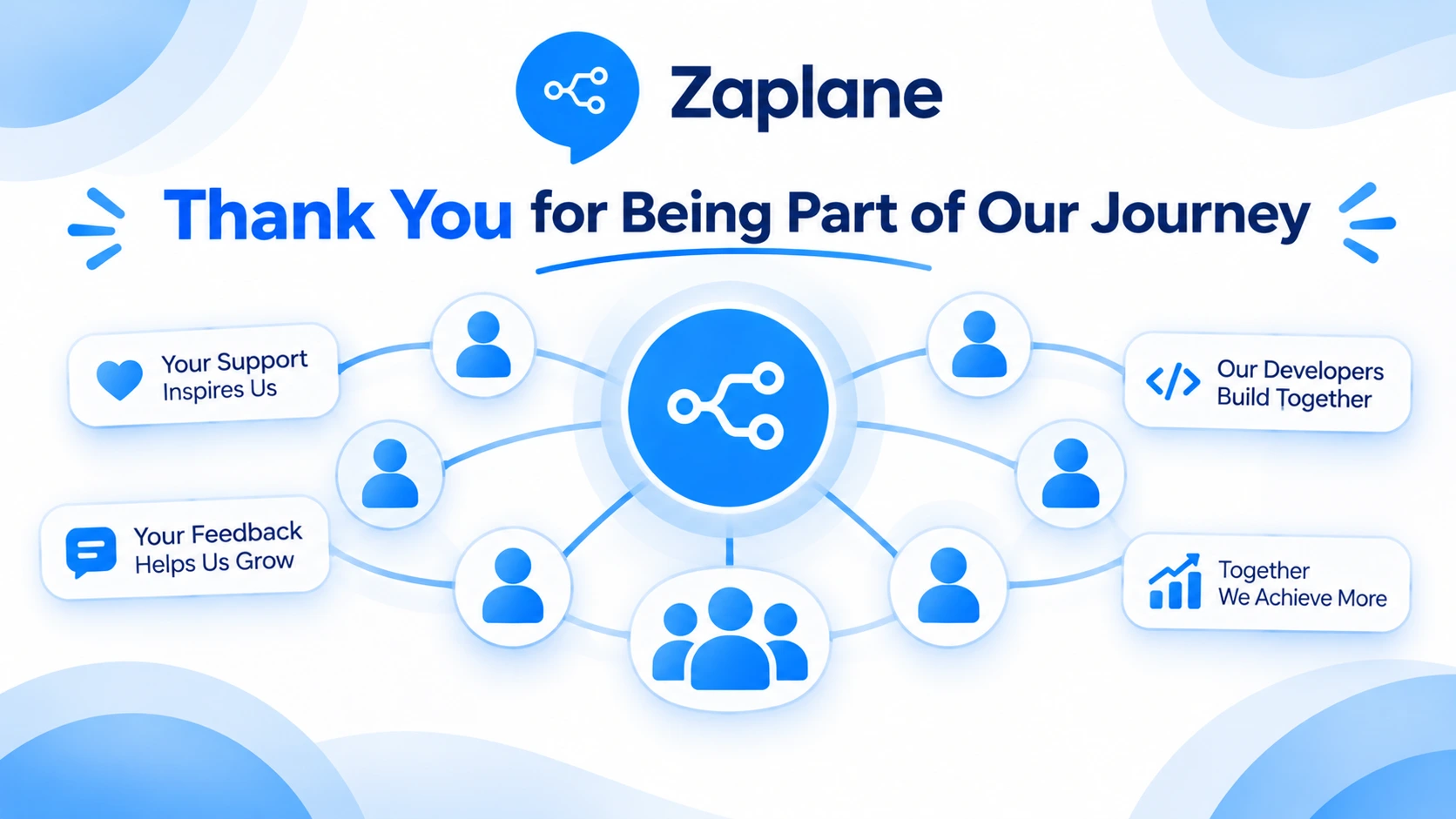
A Thank You to the Community
A product is never built through code alone.
Every integration, workflow improvement, bug fix, and feature enhancement represents continuous effort to make the platform better.
We appreciate everyone who has explored Zaplane, tested its features, built workflows, and helped identify areas for improvement.
Your feedback helps us understand the real challenges WordPress users face when connecting plugins and automating everyday tasks.
As Zaplane continues to grow, we want to keep building with the needs of WordPress users and developers in mind.
Thank you for being part of this journey.
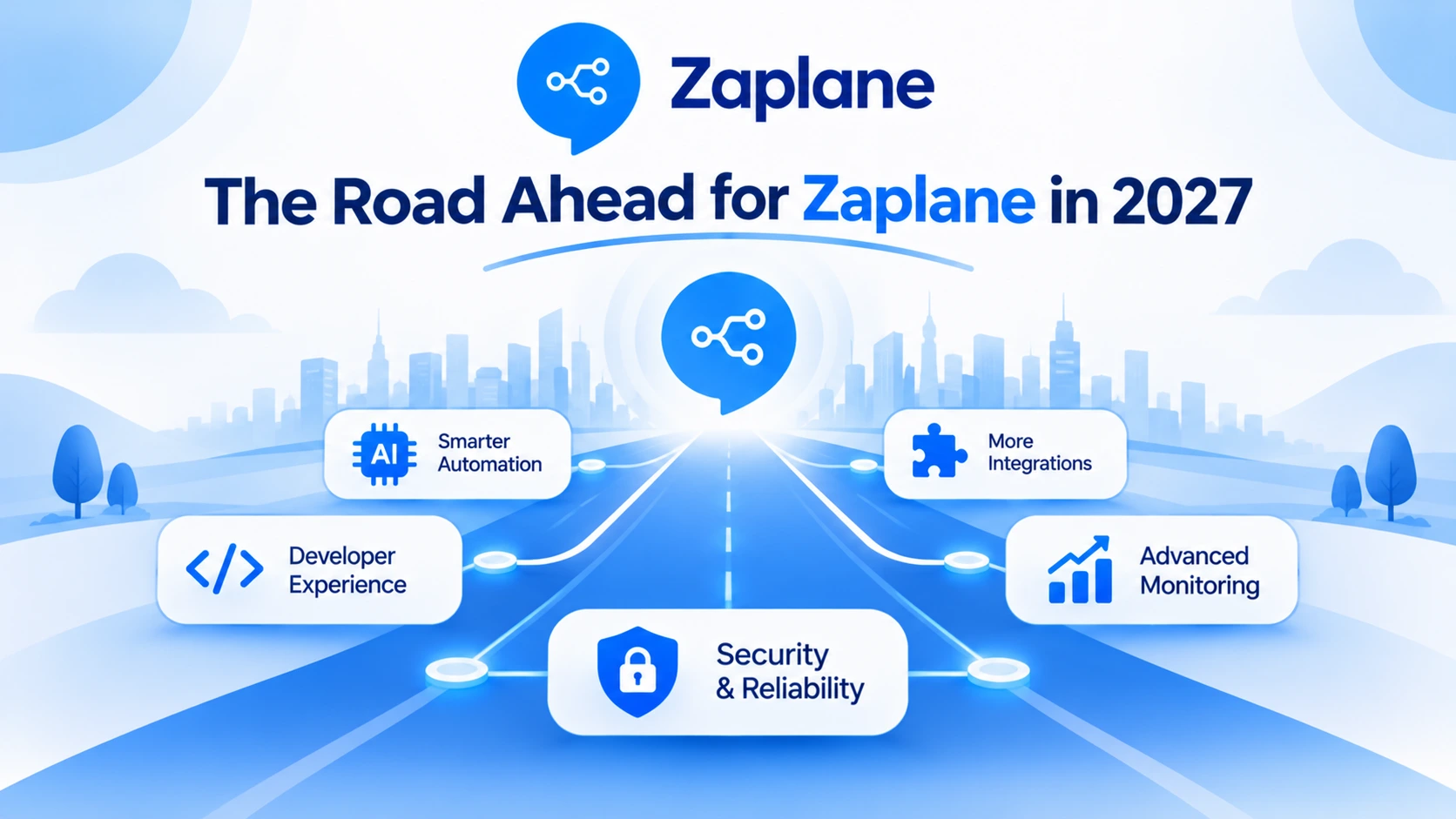
What’s Next: The Road Ahead for Zaplane in 2027
2026 helped establish a stronger foundation for Zaplane.
We expanded the integration ecosystem, introduced AI-powered automation capabilities, improved workflow processing, and made the platform more extensible.
But we’re not stopping here.
As we move into 2027, our continued development focus includes:
These are ongoing development priorities, not guaranteed release dates or a finalized feature roadmap.
Our long-term vision remains the same: make Zaplane a powerful, flexible, and accessible automation platform for the WordPress ecosystem.
Conclusion: Building the Future of WordPress Automation
From a visual workflow builder to a growing ecosystem of 143 apps and tools, 2026 has been an important year for Zaplane.
We introduced AI Agents, expanded integrations, improved workflow capabilities, launched communication features, and continued strengthening the platform’s security and reliability.
More importantly, we established a stronger foundation for what comes next.
There is still much to build, and we’re looking forward to continuing this journey.
Thank you for following Zaplane’s progress throughout 2026.
Ready to automate your WordPress website?
Explore Zaplane and discover what you can build with connected workflows, triggers, actions, and AI-powered automation.
Zaplane — WordPress-native workflow automation, built to connect your tools and simplify your work.